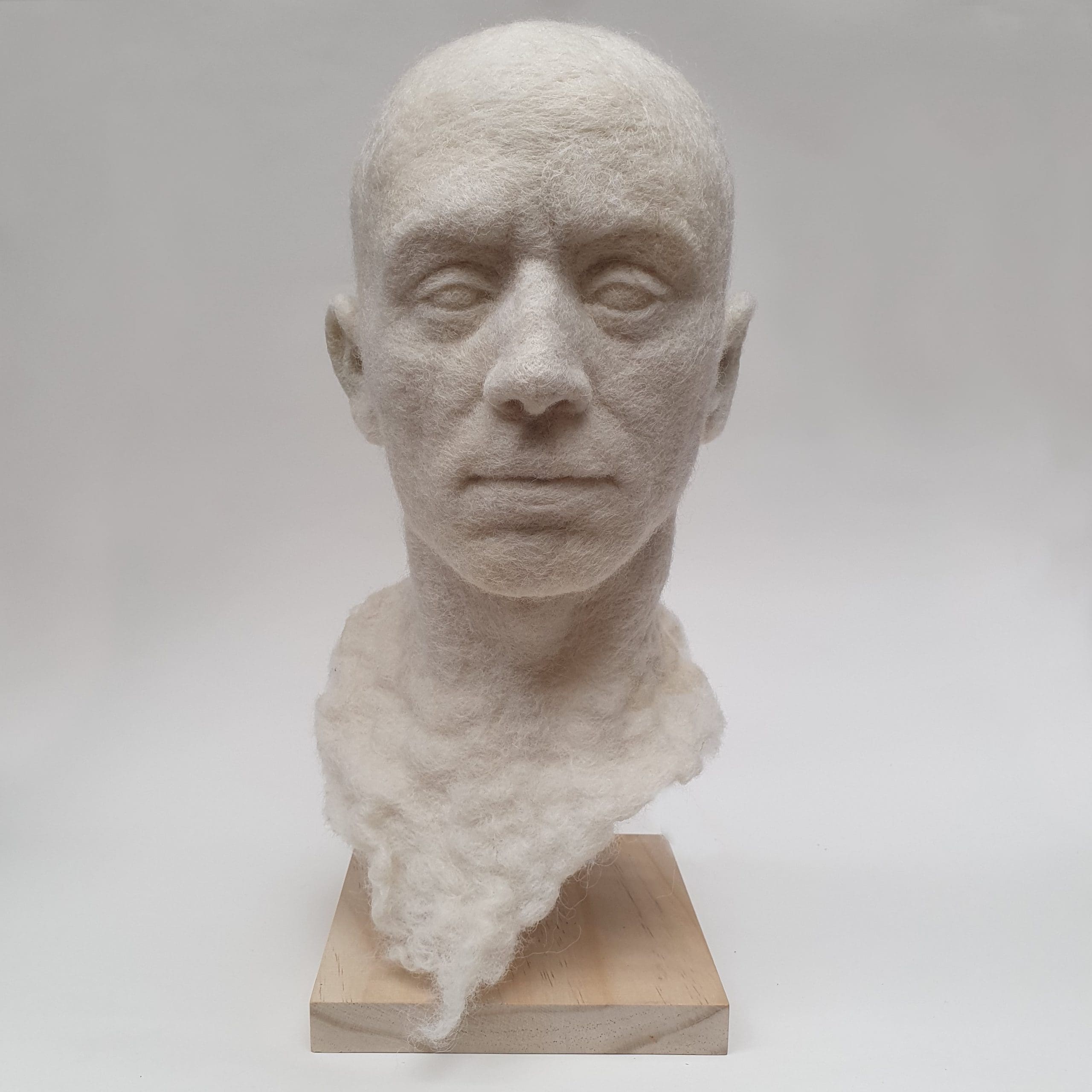
Exploring British Wool with Artist Deanne Doddington Mizen
We’re delighted to introduce artist Deanne Doddington Mizen. Who combines a passion for sustainable materials with a deep connection to the landscape of North Wales. Deanne’s work spans painting and sculpture, with British wool playing a starring role in her creative process. Here, she shares her journey, inspirations, and the unique qualities of British wool.
Can you tell us a little about yourself and what inspires you?
My friends call me Dee. I’m based in Bethesda, a village nestled beneath the Carneddau mountains in North Wales. And I’ve been a practicing artist for nearly twenty years.
I started as a portrait painter, fascinated by people. But after moving to Wales, I fell in love with the landscape and the farming community, which quickly became part of my paintings.
Around five years ago, after making many changes to live more sustainably, I realised I also needed to rethink my art practice – specifically the impact of the materials I was using. This sparked ongoing research into natural, sustainable, and local resources. Now my work spans painting and sculpture, created using earth pigments, wool, slate, and pine resin, sourced locally whenever possible.
What drew you to working with wool as a core material?
Living in North Wales, wool is abundant but sadly undervalued. It’s renewable, biodegradable, sustainable, and incredibly versatile.
I first encountered wool through a friend with a small flock of sheep, who kindly taught me the basics of wet felting. And fell in love with the material immediately and began to explore its possibilities.
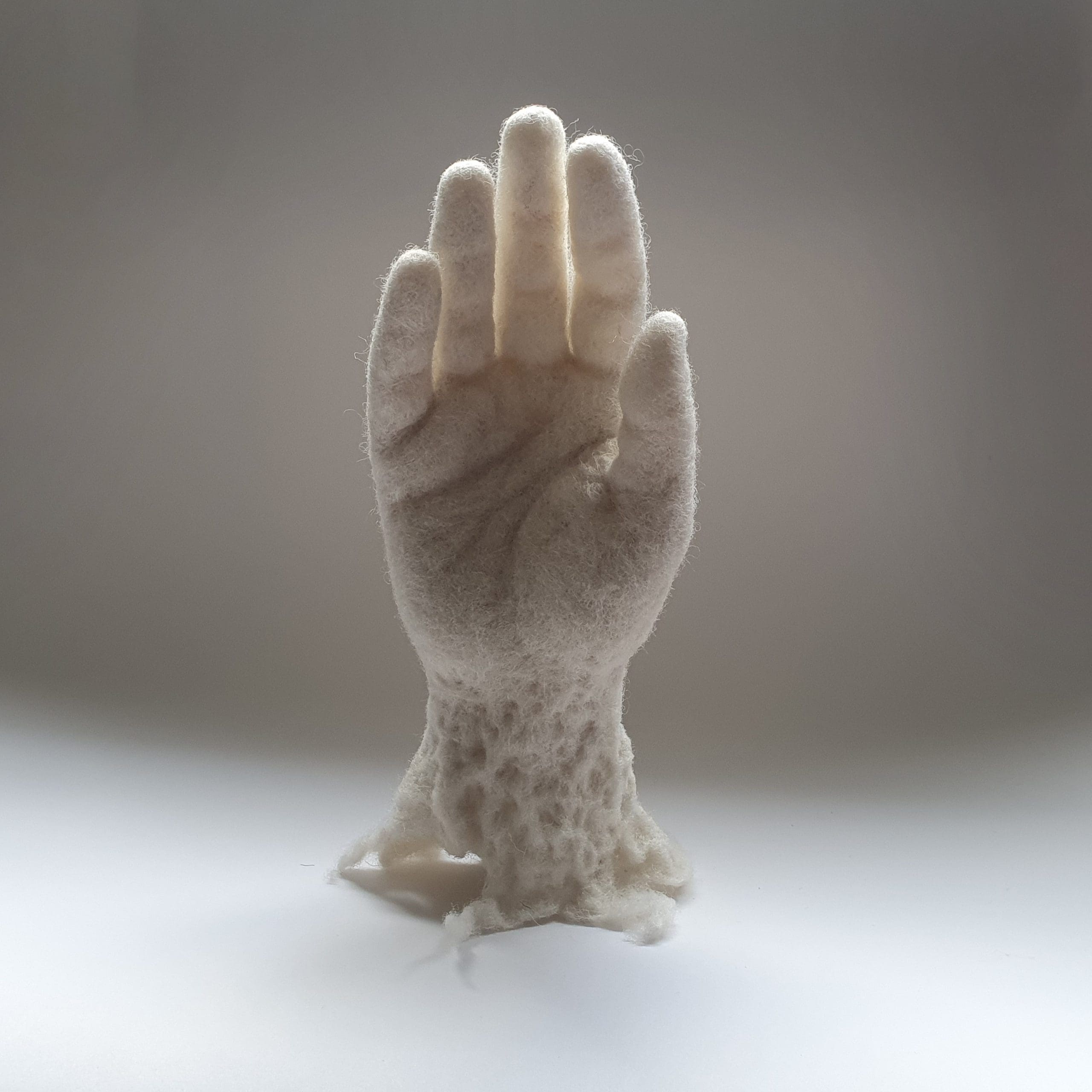
I adore wool’s natural colours and textures. It requires minimal processing or equipment and can be dyed easily, although I prefer to work with its natural hues. After making a pair of slippers using the wet felting resist method, I realised wool’s sculptural potential. Felted wool, once thick enough, becomes self-supporting with no need for an armature, opening up new creative avenues.
As a medium for recreating the human form, felted wool’s slight translucency beautifully mimics skin, and it can mirror traditional marble and stone sculptures. Although I work with other natural materials. I keep returning to wool – it’s durable, light, and works wonderfully in composites. I’d love to see more artists embrace wool instead of conventional materials like clay, stone, or metal.
Can you talk us through your creative process? How do your pieces come together?
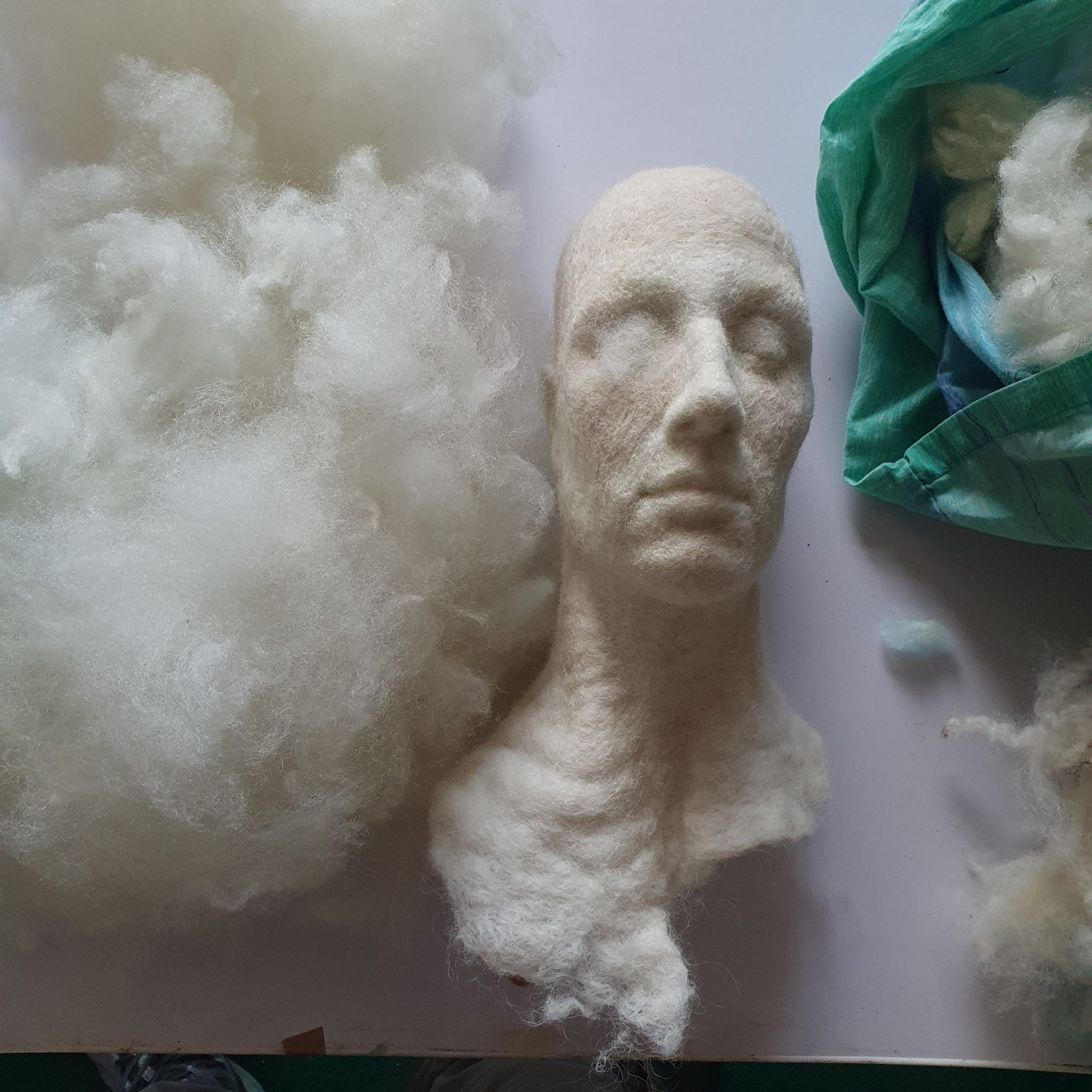
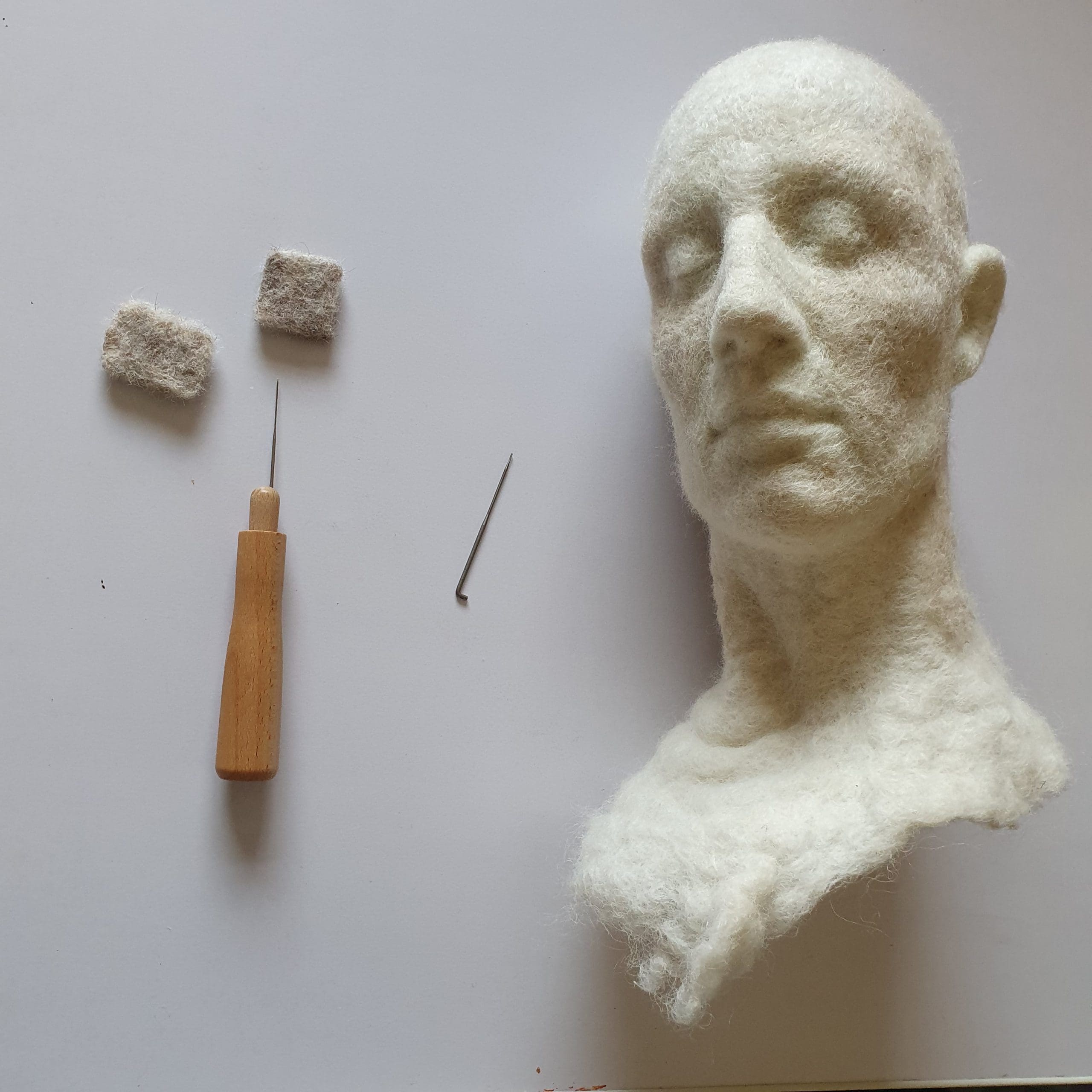
Most of my wool sculptures are hollow forms made without an armature. I typically work in one of two ways: either sculpting directly by rolling, folding, and manipulating the wool combined with needle felting, or wet felting a base form which I then refine with needle felting.
Working with wool feels intuitive and meditative, almost like clay. It’s both additive and subtractive. You can build layers or carve into it once firm. Wool can be surprisingly structural, creating crisp, angular shapes when the right type is chosen.
One challenge is that wool shrinks as it felts, so sculptures start much larger than the final size and can go through some very odd looking stages before taking shape! Beginners often panic, but with experience you learn to trust the process and not felt too hard too soon. Wool is forgiving, if something doesn’t work, it can usually be resolved.
It can feel like the wool has a mind of its own sometimes. I like to think of sculpting as a collaboration with the fibres, letting the wool guide me to its final form. On a deeper level, felted wool mirrors the importance of human connection, like mycelium threading though soil, unseen yet essential. Individual strands are delicate in isolation, but when entwined with others, they come together to form something beautiful, resilient and strong.
Sustainability is a big part of your practice. How important is material provenance and ethics?
Sustainability and resilience are central to my work, which explores local natural resources. The provenance of my materials is crucial, adding layers of meaning and uniqueness to each piece, since materials shift with seasons and location.
The landscape of North Wales looks natural but is heavily shaped by human industry – mining, farming, forestry – through millennia. These industries can be renewable and low-impact at a basic level, but industrial-scale farming and monoculture often harms the environment.
My work explores this tension with hope, growth and transition at its core.
Hill farming has been part of our culture since the Bronze Age, but small-scale farmers are disappearing due to cheap imports. Wool is often thrown away despite its heritage importance. Although there’s renewed interest in British wool, processing can be costly as so many mills have closed, and wool must be transported further.
We need to encourage regenerative farming practices that value people, the environment, and animal welfare alongside economics. Supporting British wool helps preserve heritage, sustain rural communities, and grow the value chain for farmers. Sourcing wool locally ensures traceability, accountability, higher welfare standards, and lower carbon footprints.
What makes British wool special compared to other materials?
Wool has no synthetic equivalent that matches its many benefits. It is fire retardant, anti-microbial, breathable, durable, emits no VOCs, and is renewable and biodegradable. The UK boasts around sixty sheep breeds, offering incredible variety in colour, texture, and weight.
Are there any recent projects you’re especially proud of?
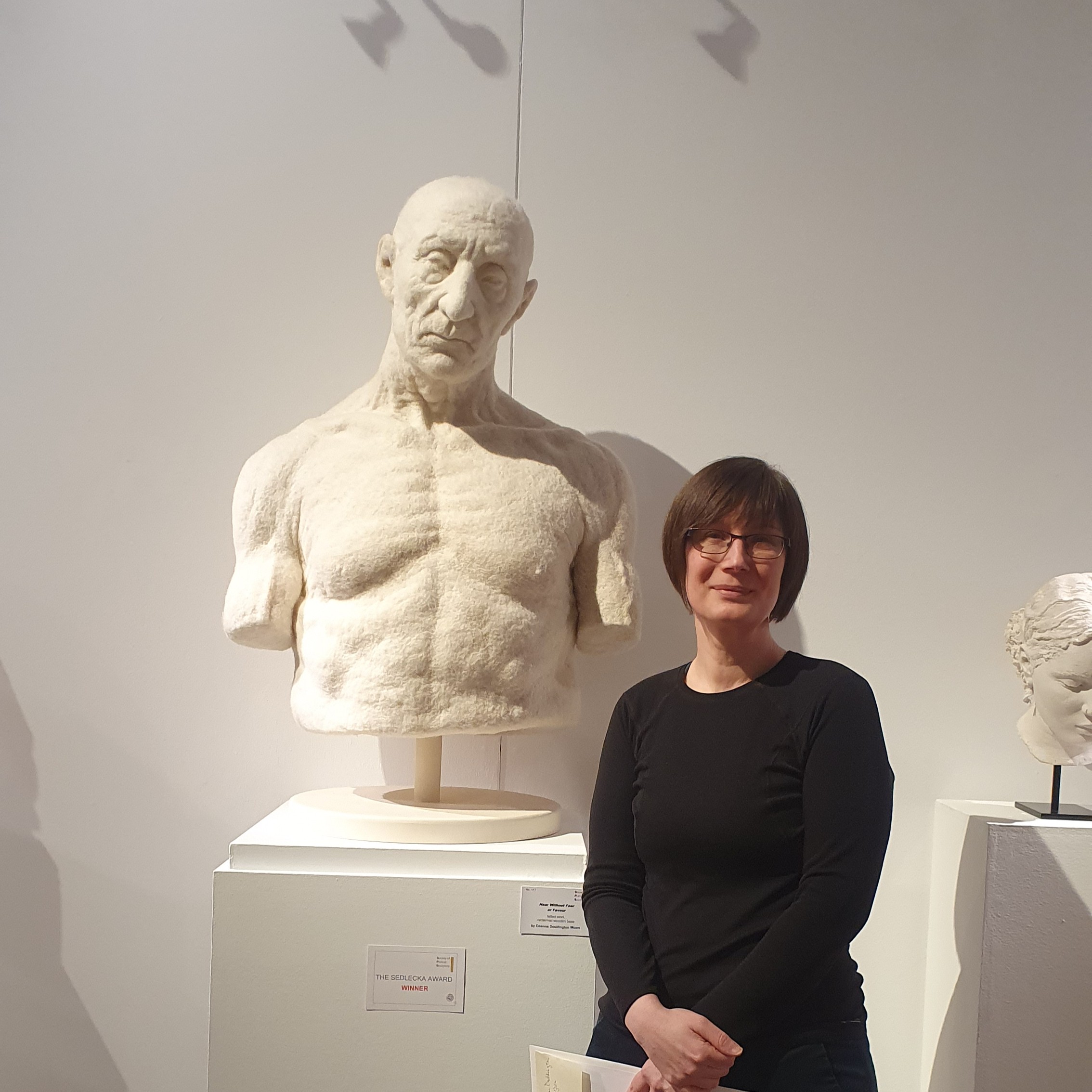
In March this year, my sculpture Hear without fear or favour, made from pure Welsh wool, won the Sedlecka Award for best exhibit at the Society of Portrait Sculptors Open Exhibition, FACE 2025.
The exhibition held at the Garrison Chapel, in Chelsea, London, features around 100 sculptors from 30 countries, mostly working in traditional materials like plaster, bronze, or stone. Winning with a wool sculpture signals growing acceptance and appreciation for sustainable materials.
What would you say to someone considering using British wool for the first time?
Do it! It really does help to learn a little about the different types of wool though, as they have very different qualities. If you choose the right type, it makes life so much easier.
Fine wools like Bluefaced Leicester are perfect for spinning, weaving, and soft garments worn close to skin. For durability and structure – like needle felting, rugs, or shoes – coarser, heavier wool like Hill and Cross breeds such as Cheviot and Shetland work better as they will allow you to build size and strength quickly.
With the growing pressures we face from climate change, choosing local British wool over imported or synthetic fibres is a simple, positive step towards sustainability.
Where can people find more of your work?
Visit Deanne’s website: www.deemizen.com
Follow her latest creations on Instagram: @deannemizen_art
We hope Deanne’s story inspires you to discover the versatility and beauty of British wool in new and creative ways!