
Hampshire Down Sheep: Guardian of Britian’s Chalk Grassland
Hampshire sheep, particularly the hardy Hampshire Down breed, play a crucial role in maintaining the UK’s biodiverse chalk grasslands. Also known as chalk downland or lowland calcareous grassland, these softly rolling pastoral landscapes are alive with aromatic, flower-rich turf, teeming with insects.
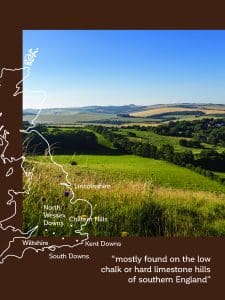
This habitat is mostly found on the low chalk or hard limestone hills of southern England and along the wilder coastal cliffs and headlands of limestone country in the west of England and Wales. The largest area of chalk grassland in Europe, however, is found on the flat plateau of Salisbury Plain.
Adapted to Downland Life
Over generations, farmers in this region have selectively bred sheep that could thrive in the dry, exposed, and nutrient-poor conditions typical of downland landscapes. Despite this low-quality forage rather than lush pasture, Hampshire Down Sheep can maintain good health and productivity. Their hardiness and physical build allows them to cope with steep slopes, hard, dry soils and windy conditions common in open downland.
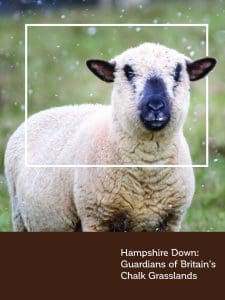
The Hampshire Down Sheep originates from southern England, and are prominent particularly around Hampshire, Berkshire and Wiltshire. The breed was developed during the early 19th century by crossing a Southdown with local horned sheep such as Wiltshire Horn or Berkshire Knot. Easily recognised by their dark brown faces and legs. Their fleece is dense and white, often completely covering their faces apart from their nose, eyes & ears.
Their grazing behaviour also benefits this ecosystem. Hampshire Downs tend to graze vegetation down to a short, even sward, which helps maintain the open structure required for chalk grassland habitats. Without grazing, these grasslands would quickly become dominated by tall grasses or scrub.
Biodiversity Supported by Chalk Grasslands
Chalk grasslands hold a diversity of species including orchids, Thyme and Knapweed, which in turn support butterflies like the Adonis Blue and Chalkhill blue. The short, nutrient-poor turf is ideal for invertebrates and ground-nesting birds such as Skylarks and Meadow Pipits.
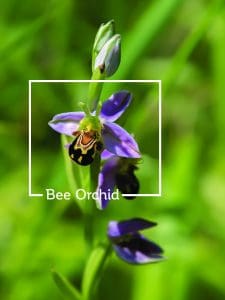
- Bee Orchid
- Thrive in nutrient poor chalk soils
- Prefer short, open turf to give them enough sunlight
- Reduced competition allows their slow-growing roots and fungal relationships to establish
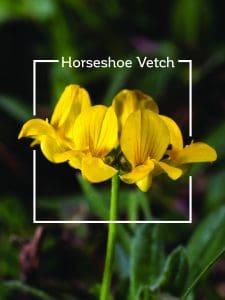
- Horseshoe Vetch
- Well adapted to dry, alkaline chalk soils
- Its low-growing structure helps it survive in windy, exposed downland environments
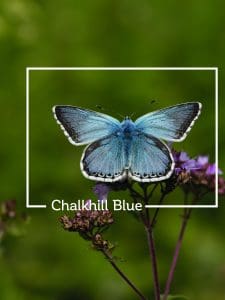
- Chalkhill butterfly
- Larvae feed on nectar from plants such as the horseshoe vetch
- Relies upon the presence of ants
- Prefers warmer climate and short turf
- Skylark
- Allows it to spot predators while nesting on the ground
- Abundant insects and seeds for feeding adults and chicks
Hampshire sheep do not create chalk grassland species directly, but their grazing behaviour helps maintain the short, nutrient-poor turf that these plants and animals rely on. By managing vegetation height and preventing scrub encroachment, Hampshire sheep act as natural stewards of the landscape, preserving the rich biodiversity of Britain’s chalk downlands.
If you want to learn more about Hampshire sheep, visit the Hampshire Down Sheep Breeders’ Association website.