
Could Your Duvet Be the Secret to Better Sleep?
For many couples, bedtime can be a battleground. From snoring and cold feet to duvet hogging and “bed breath.” Almost one in seven Brits have even slept in separate rooms to escape a partner’s “sleep icks.” But new research suggests the real culprit might not be your partner – it could be your duvet.
Heat, Moisture, and the Sleep Struggle
Scientific testing by the BioComposites Centre at Bangor University, commissioned by British Wool in partnership with the International Wool Textile Organisation (IWTO) and funded by the Welsh Government, reveals that many common duvet fillings create a sleep environment that’s less than ideal.
The study compared full-sized single duvets of similar tog ratings (10–10.5) across a range of fillings: wool, synthetic (polyester), feather & down blends, and 100% down. Researchers tested thermal insulation and moisture movement – two critical factors for sleep comfort.

The results? Wool outperformed every other filling in key areas:
-
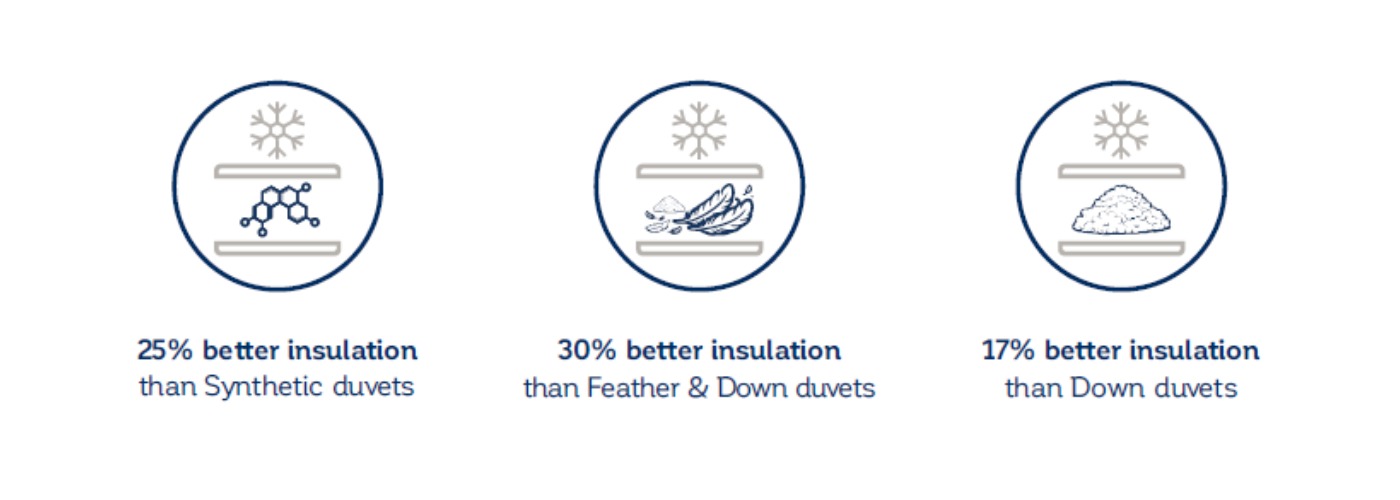
Thermal insulation: Wool duvets had the lowest thermal conductivity, meaning they kept warmth in more effectively than synthetics (25% better), feather & down (30% better), and pure down (17% better). Even though wool duvets appear thinner and less lofty than other fillings. They deliver superior warmth and maintain a stable temperature from top to bottom throughout the night.
-
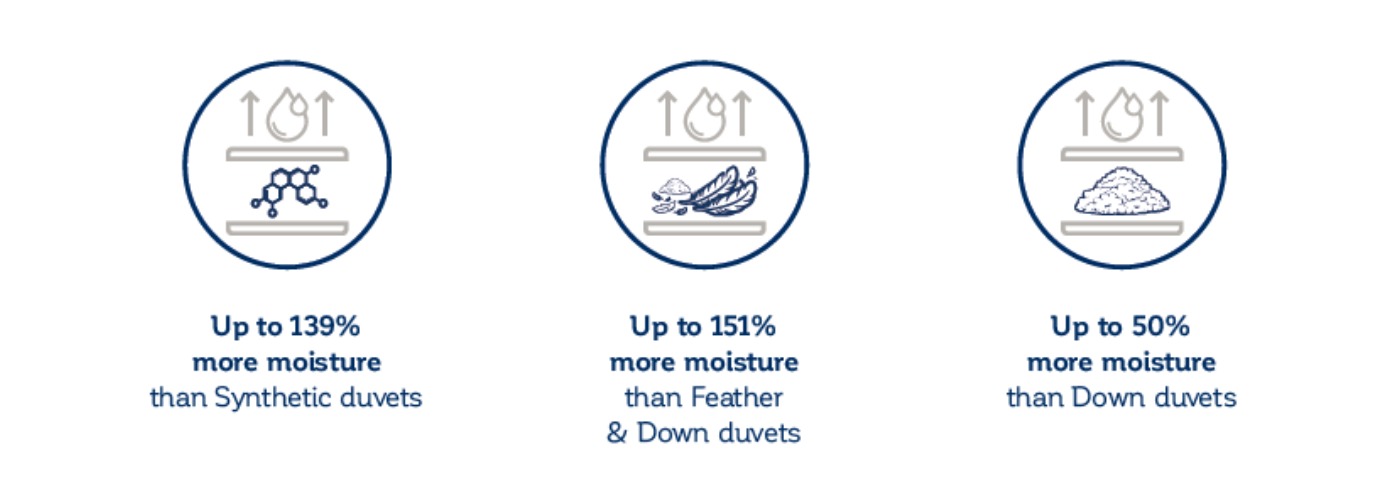
Moisture management: Wool fibres can absorb up to 30% of their weight in moisture without feeling wet. Testing showed wool duvets transmit moisture faster and more efficiently than other fillings. Up to 120% faster than synthetics and 153% faster than feather & down. This helps evaporative cooling work effectively, preventing overheating and clamminess.
Professor Graham Ormanroyd from Bangor University explains:
“When you sleep, your body is constantly trying to keep itself at the right temperature. If heat and moisture build up under the duvet, the body struggles to cool down – and that’s when people wake up feeling too hot, too cold, or restless.
Our testing showed that wool duvets are much better at managing both heat and moisture, which helps keep the sleep environment more stable through the night
In simple terms, if your bed can’t cope with heat or sweat, your sleep – and, as the research shows, your partner – will suffer.”
Why This Matters for Couples
The survey revealed that many Brits go to great lengths to get a good night’s sleep. Using earplugs (14%), buying a bigger bed (13%), or trying viral TikTok hacks (7%). Yet, almost no one thinks to change their duvet, even though a simple switch could solve many sleep issues.
Graham Clark, Director of Marketing at British Wool, says:
“People are blaming themselves – or their partners – for bad sleep, when in reality the problem is sitting right on the bed.
We found people will try earplugs, supplements, and even sleeping in separate rooms, yet almost nobody thinks to change their duvet. It’s a simple switch that could save a lot of tired mornings – and a few bedtime arguments too!
It’s time to fix the problem, not simply manage the symptoms.”
With the average Brit spending around £10 a week trying to cope with tiredness, investing in a wool duvet isn’t just a comfort upgrade- it’s a smart way to improve sleep quality.
Wool: A Sleep Solution That Supports UK Farmers
The Bangor University research focused on Welsh wool, but the findings apply to other British wools as well. As the benefits of wool bedding become more widely recognised, demand for British wool in the sleep sector is expected to grow, supporting UK sheep farmers and helping keep this natural, sustainable fibre in use.
So, if your nights are being ruined by heat, sweat, or restless tossing, the solution may not be changing the partner – it may be changing the duvet.
Discover how wool can transform your sleep here.