
Spinning Tradition into the Future
Q&A with John Arbon Textiles
At John Arbon Textiles, heritage and craftsmanship go hand in hand. Known for their beautifully spun yarns and commitment to traditional techniques, the mill has built a loyal following among knitters, crafters, and fibre enthusiasts. But what goes on behind the scenes to create these beloved woolly treats?
In this exclusive Q&A, we chat with the team at John Arbon Textiles about their journey – from the brand’s humble beginnings to its innovative approach to wool processing. They share insights into their sustainable practices, the charm of working with British wool, and what exciting projects are on the horizon.
Let’s dive in!
John Arbon Textiles (JAT) is known for its beautiful yarns and heritage-driven approach. Can you tell us about the origins of the brand and what inspired you to start spinning yarn?
“JAT was started by Mr John Arbon himself, along with his wife, Juliet. They owned the business for 21 years and gradually built it from the bones up. Initially, they were working out of a historical water-powered mill, Coldharbour, but over time John was able to re-home enough machines to be able to move to our current unit in South Molton.
Both Helena and Sonja had been working at JAT for rather a while before taking the helm a few years ago. When Juliet and John told us they were looking to retire, it was very much only if we fancied taking over and continuing on – we always joke that we were the only two Mill Folks foolish enough to take on all the responsibility!
We’ve gradually been adding more and more UK-grown fibre to our ranges, as we strongly believe in buying locally from an environmental and economic perspective.”
Your mill operates using traditional machinery. How does this set you apart from other yarn producers, and why is it important to preserve these techniques?
“Having our own mill means that we have greater flexibility about what we make and, in most cases, a deeper understanding of what fibre we are using and where it is coming from. Like most products out there, the majority of yarn in the world is made in giant factories by an exploited workforce.
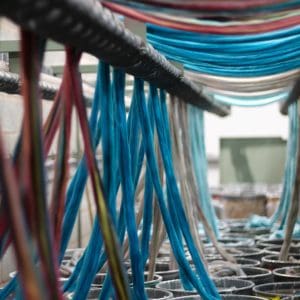
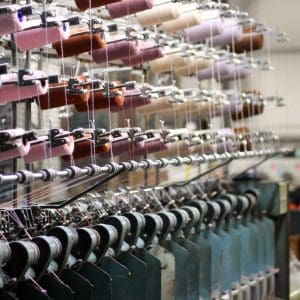
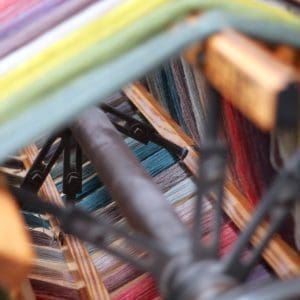
All our machines here have been painstakingly collected and lovingly restored – many have been rescued from old, traditional mills as they closed down. The machines take a lot of time and care to look after (each named, to reflect their quirks, as they become part of the family) – tinkering with gears, belts, oil levels or adjusting cogs. Keeping them going is a labour of love, but we reckon that the resulting woolly treats are well worth it.
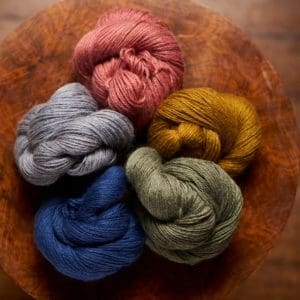
The way we blend our heathered shades from tops rather than dyeing the finished yarn is also something that sets us apart from other mills. This allows us to make those magic shades which, from further away, appear as a solid colour but up close, have a kaleidoscope of different hues living inside them. There aren’t many worsted mills using a dyed-in-the-wool process. “
 |
 |
 |
Sustainability is a big focus for many knitters and crafters. How does John Arbon Textiles ensure an environmentally friendly approach to wool processing and yarn production?
“John Arbon Textiles is based on a very simple concept: a return to old-style textile manufacture by sustainably sourcing raw fibre locally, wherever possible, and converting it in the UK into high quality tops and yarns, rather than racking up air miles by chasing the cheapest available labour.
We buy our fibre via two sources. We source the finer stuff like Merino and Corriedale (outside the UK) from our wool agent, the splendid Andrew Bowman of Wooltops. He purchases it directly from farmers in the Falklands and overseas and visits every few years to see the flocks and build those relationships. The UK-grown fibre we purchase through British Wool’s (formally known as the British Wool Marketing Board) via auction.
We have been developing new ranges like our Devon Naturals yarn and tops, that only use fibre from a curated selection of our local wool in undyed gradient shades. We have also been reinventing old favourites, like our Knit by Numbers range, which last year changed from a 100% Merino product to 50% Merino and 50% locally sourced Bluefaced Leicester.”
Natural fibres are at the heart of your work. What do you love most about working with them, and in particular British wool?
“There is a wealth of gorgeous fibre right here in the UK. The Mill is situated in the heart of North Devon, so as much as possible, we use the fibre which is reared and sheared on this land. All these different breeds have their own unique properties and discovering their glorious differences and characteristics is an absolute pleasure.
Whilst experimenting with different local breeds, we have found a few firm favourites, including the Exmoor Blueface Mule, a crossbreed of the Exmoor Horn and Bluefaced Leicester. This wonderfully bouncy fibre, with a hint of drape and lustre, is the main ingredient in all our British wool yarn & tops ranges, such as Devonia and Appledore.
Zwartbles fibre is another favourite because of its long staple length and naturally dark brown colour. We add a dash to Harvest Hues and Devon Naturals yarn & tops and Exmoor Sock ranges for a wonderful depth of tone.”
Many knitters and crafters love your products – what advice do you have for those new to working with wool?
“Don’t be afraid to experiment with lots of different breeds in different weights and blends. Wool is such a forgiving and experimental medium and there’s definitely something for everyone and every project. A good place to start is to ask yourself what you want from the finished product. Do you want a jumper to wear as a cosy outer layer in the coldest months? Try a fibre with hard-wearing character and bounce, like a Devon Closewool or Zwartbles. Making a shawl that needs drape and a smooth texture? Look for something with lustre and softness, like a Romney or Exmoor Blueface.
The good thing about experimenting with wool, is that you can always rip back and start again!”
 |
 |
 |
What’s next for John Arbon Textiles? Any upcoming yarn launches or projects? What’s exciting you most right now?
“We’re always spinning many plates. Right now, we’re busy planning our annual Mill Open Weekend and the special, limited-edition yarn and tops that will debut at the event. This year is extra exciting, as we’re making our customers honorary Mill Folk, and letting them pick everything from the fibre blend to the colour palette. Voting is still underway, so we can’t wait to see what gets chosen!
We’re also busy putting together our Annual Issue 5, our yearly magazine, featuring a collection of patterns, puzzles, articles, and interviews. (Coming out in the autumn.) We’ve also got a few exciting new yarn releases up our sleeves, as well as a few collaborations with some very talented hand dyers. It’s going to be a jam-packed 2025!”