Traceability from Farmers to Customers
When it comes to sustainability, few words carry more weight—and more confusion—than “traceability.” But for Woolroom, traceability isn’t just a buzzword; it’s a core principle driving their mission to create healthier, more transparent sleep environments.
In this Q&A, we speak with Woolroom’s Managing Director, Chris Tattersall, to uncover the journey behind their fully traceable British wool bedding. From the importance of provenance and customer trust to the positive impact on UK sheep farmers, Chris shares how Woolroom is reconnecting consumers with the origins of their products—and helping them sleep better in the process.
What inspired Woolroom to focus on traceable wool bedding, and why is provenance so important to you as a brand?
In a world where “sustainable” has become synonymous with a disingenuous marketing term, traceability, transparency and trust have never been more important for consumers who truly value sustainability. Transparency and provenance are therefore extremely important to us at Woolroom, not just in response to customer demands, but because doing the right thing has always been one of our core values.
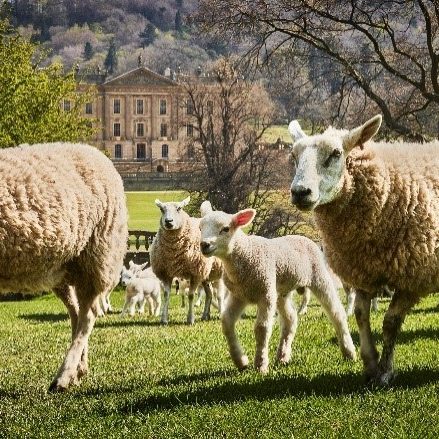
Our supply chain is made up of traditional British farmers who have been producing the highest quality wool through responsible farming techniques for generations, so we want to champion the people who help to produce the incredible wool fibres that our customers know and love.
Why is traceability so important to Woolroom, and what benefits does it bring to customers when choosing wool bedding?
Being honest about the origins of a product has many benefits for customers. Crucially, it builds trust, giving consumers more control and confidence that their purchasing power will result in positive sustainable action. We want Woolroom shoppers to rest easy in the knowledge that investing in our wool bedding genuinely does mean their money is helping to drive sustainable production and support British farmers, right here in the UK.
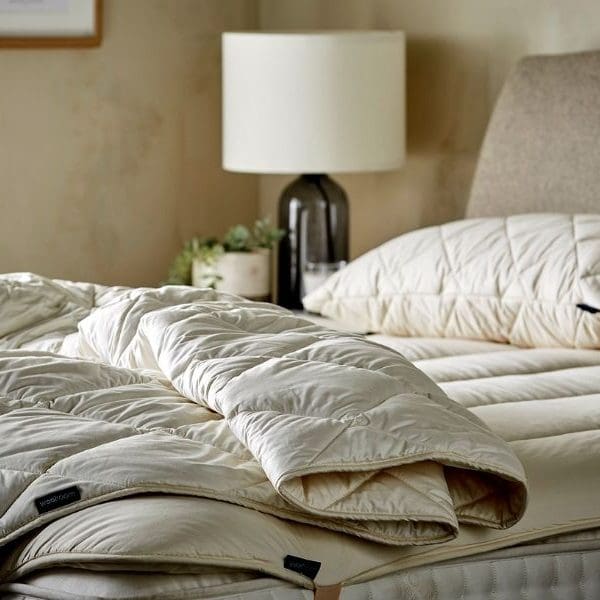
Traceability also means that our customers know that they will be getting genuine British wool bedding, which will bring a long list of benefits that help to deliver the best night’s sleep possible. This includes temperature regulation, moisture management, self-cleaning and hypoallergenic properties, which have been scientifically proven to give a deeper, more restorative sleep than synthetic and feather and down bedding.
What benefits does traceability bring to farmers?
For farmers, there is certainly a monetary benefit to being open about processes, production methods and provenance. At Woolroom, we always pay a premium over and above the British Wool auction price for the wool we buy, which is returned to the relevant farmers. Qualifying to partner with us and joining our Wool ID® programme can therefore help to ensure farmers have access to fair pay, increased demand for products, and investment into new and innovative techniques.
The benefits of course extend beyond monetary gains. Traceability brings benefits of the transparency of knowing where their products are being sold, and feeling good that their wool is being used to change the lives of consumers.
Can you tell us more about the Wool ID® programme and how it works?
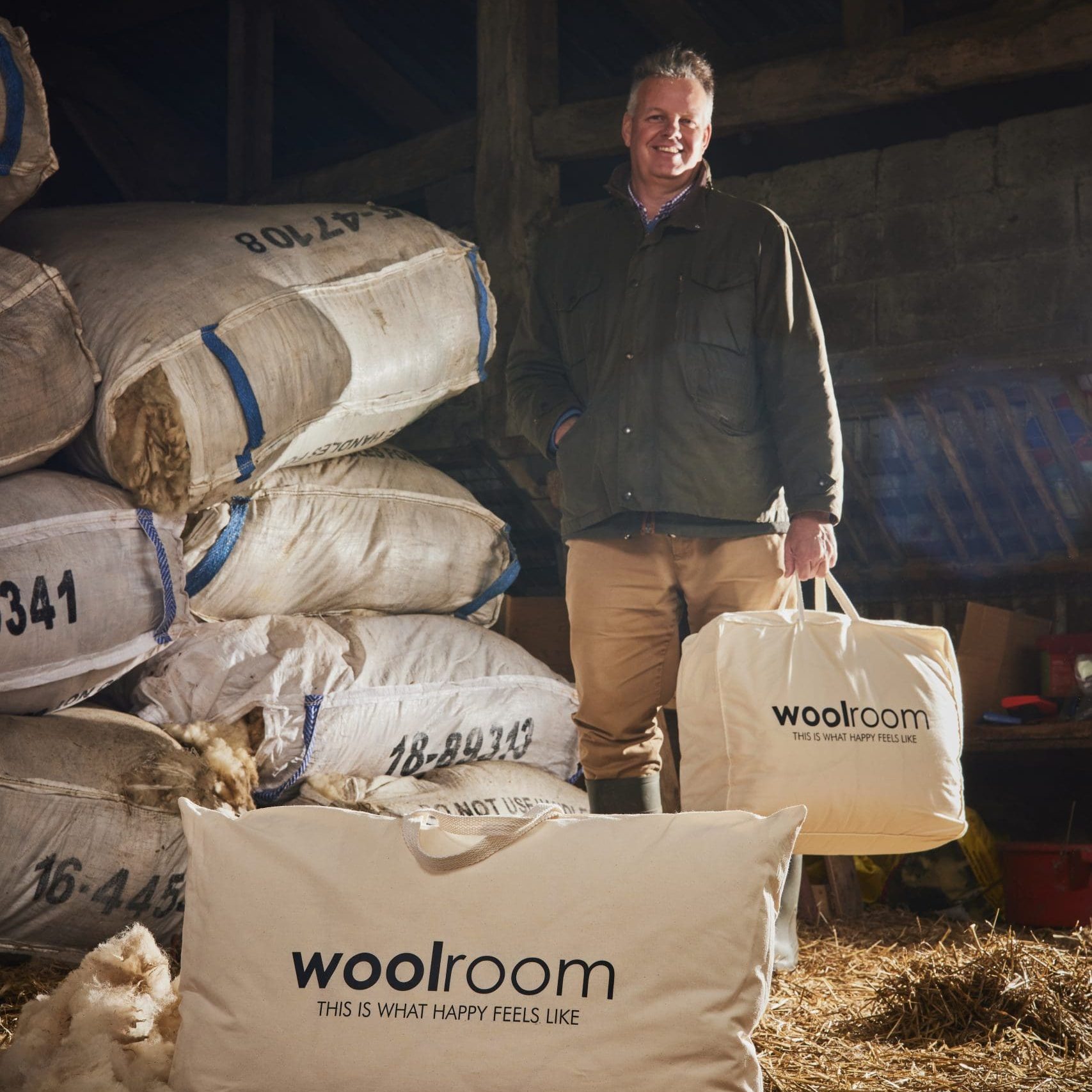
In 2020, we launched our Wool ID® traceability programme in conjunction with British Wool. This allows customers to trace the origin of every product back to the specific farm and flock it came from, using a QR code system that is completely unique to Woolroom. All of our wool products carry the Wool ID® code, including our wool mattresses and bedding.
Our wool is sourced from over 700 farmers, such as Cracrop Farm in Cumbria, the local Scott family farm in Rutland, alongside a variety of farms in Wales, which farm mountain breeds Radnor and Badger Face sheep. It’s these small details that the customer has access to, which help to show that care and attention has gone into every product.
Woolroom is built on 150 years of textile manufacturing knowledge, and we continuously apply advancements in manufacturing capabilities to our products. Wool ID® is just one innovation that represents this fusion of blending our expertise with modern techniques. Another example is our Global Organic Textile Standard (GOTS) certification, which is a world-leading standard that has been awarded to our Organic bedding range, making ours the only wool bedding in the UK that is both washable and GOTS-certified.
What has been the customer response to Wool ID® so far? Have you seen a growing demand for transparency in the bedding industry?
The response has been really positive, as customers recognise that Wool ID® is a unique tool only available at Woolroom, showing our commitment to being as transparent as possible about our supply chain and the materials that our bedding is made from.
Our sales data shows this demand – with sales of our premium products having increased by 20% over the last year alone. This demand can also be seen via Google search data, with consumers seeking sustainable products in every category. The search topic ‘sustainability brands’ has grown 400% over the past five years. Meanwhile, searches for ‘sustainable bedding’ increased by 120% according to Google Trends data in March 2025.
What challenges have you faced in developing fully traceable wool bedding, and how have you overcome them?
We started this journey 14 years ago when we challenged British Wool to consider the ability to provide traceability through their amazing wool grading capability.
It is unbelievable to think how far the industry has come – when Woolroom began, synthetic, unethically produced fibres in bedding were all the rage. Wool had become so undervalued that the only viable option was for farmers to burn it, which affected livelihoods, wasted the resource and harmed the environment.
We’re proud to have played a part in completely reversing this trend, by showcasing the work of the farmers that we source from and creating that demand for responsibly sourced products.
From the perspective of the farmers you work with, what does it mean to be part of a fully traceable wool supply chain?
The British sheep farmer has long clamoured for better prices for their amazing fibre, and I think our farmers are genuinely delighted to see their wool going towards a really valued commodity that makes a real difference to people’s health and wellbeing. In addition, the immediate premium payment above market value is seen as a reward for the added benefit of being farm assured and buying into the Wool ID® supply chain.
How do you think traceability helps strengthen the relationship between farmers, brands, and consumers?
I think farmers for too long have not known where their wool ends up and what it used for. The Wool ID® programme from Woolroom changes all of that and they now have the visibility on where Woolroom is selling its products with their wool inside – from the UK to the US to Canada. They can also see that the consumer has visibility on the group of farms that are supplying the wool into their product of choice. This brings the whole chain of farmer, brand and consumer together.