Wild Uplands: Art in the Landscape
UK City of Culture
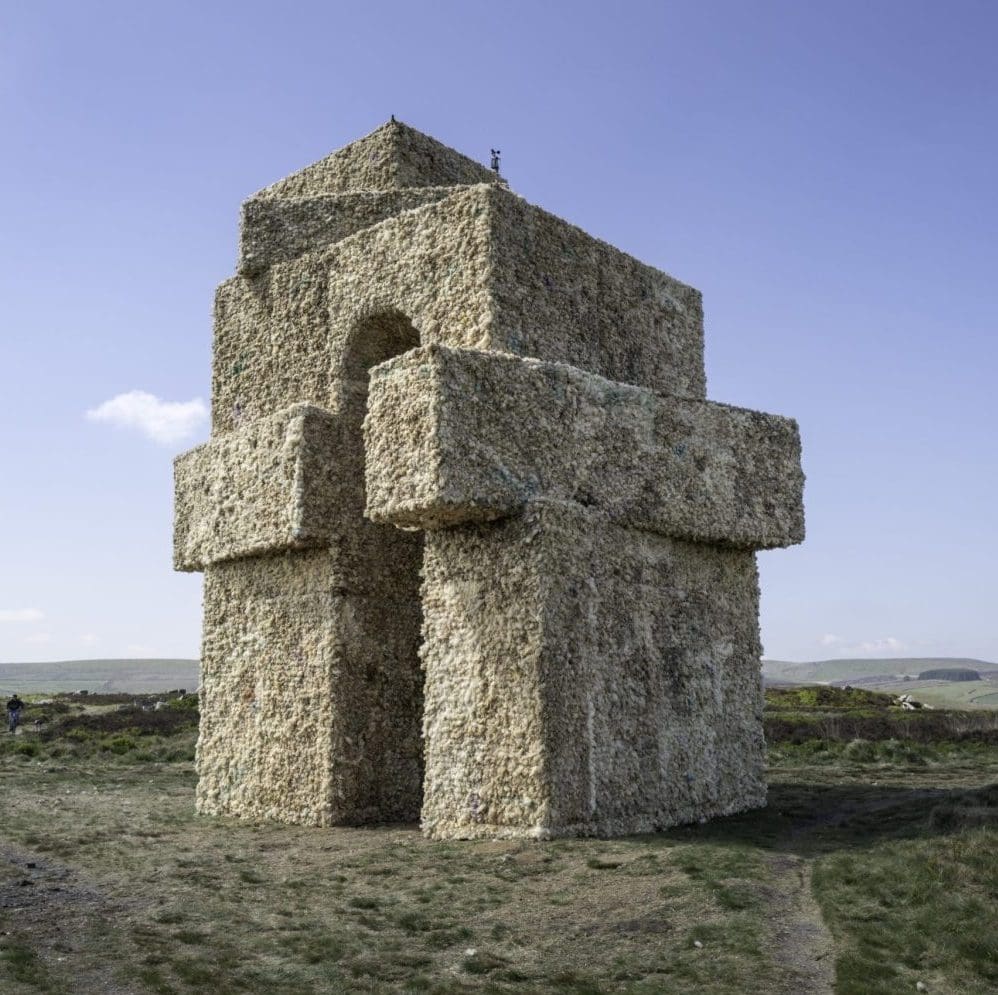
As part of Bradford 2025: UK City of Culture, artist Steve Messam has created a striking and immersive installation for the Wild Uplands project — a towering structure clad entirely in raw British fleece, rising from the moors above Haworth.
The Wild Uplands installation recently featured on BBC Countryfile, where millions of viewers were introduced to the remote moorland sculpture and the story behind it. As part of the wider Bradford 2025 programme, the piece plays a key role in bringing national attention to the region’s rural identity, creativity, and deep-rooted connection to wool. The feature shone a light on both the artistic process and community contribution and family farming that continues to shape the area today.
This year also marks the 75th Anniversary of British Wool — a perfect moment to reflect on the enduring legacy of our industry. Projects like Wild Uplands demonstrate just how powerful and relevant wool still is, not only as a sustainable material, but as a symbol of identity and culture. As we celebrate this milestone, we’re proud to support work that brings British wool into the heart of public imagination.
A Conversation with Environmental Artist Steve Messam
Steve shares his creative journey, the challenges of working in remote landscapes, and the powerful connection between sheep, place and people.
“I’m an environmental artist based in rural County Durham,” Steve begins. “I typically create large-scale, temporary artworks that sit in remote landscapes or historic architecture. The idea is to use art to help people see what’s already around them with fresh eyes.”
Invited to respond freely to the Wild Uplands brief, Steve was immediately drawn to the opportunity to work in such a rural setting. “There’s a wonderful freedom that comes with making work in the countryside,” he explains. “You’re not competing with gallery walls or urban expectations — you’re meeting the landscape on its own terms. Living in an upland farming community myself, the moors above Haworth already had a connection for me.”
A Tower of Wool
The sculpture itself takes inspiration from the close relationship between sheep and landscape — a symbiosis deeply rooted in place. “Every landscape has its own sheep breed. There’s something fascinating about how they’ve shaped each other. And with Bradford’s wool heritage, I wanted to explore that connection from its source: the uplands and their flocks.”
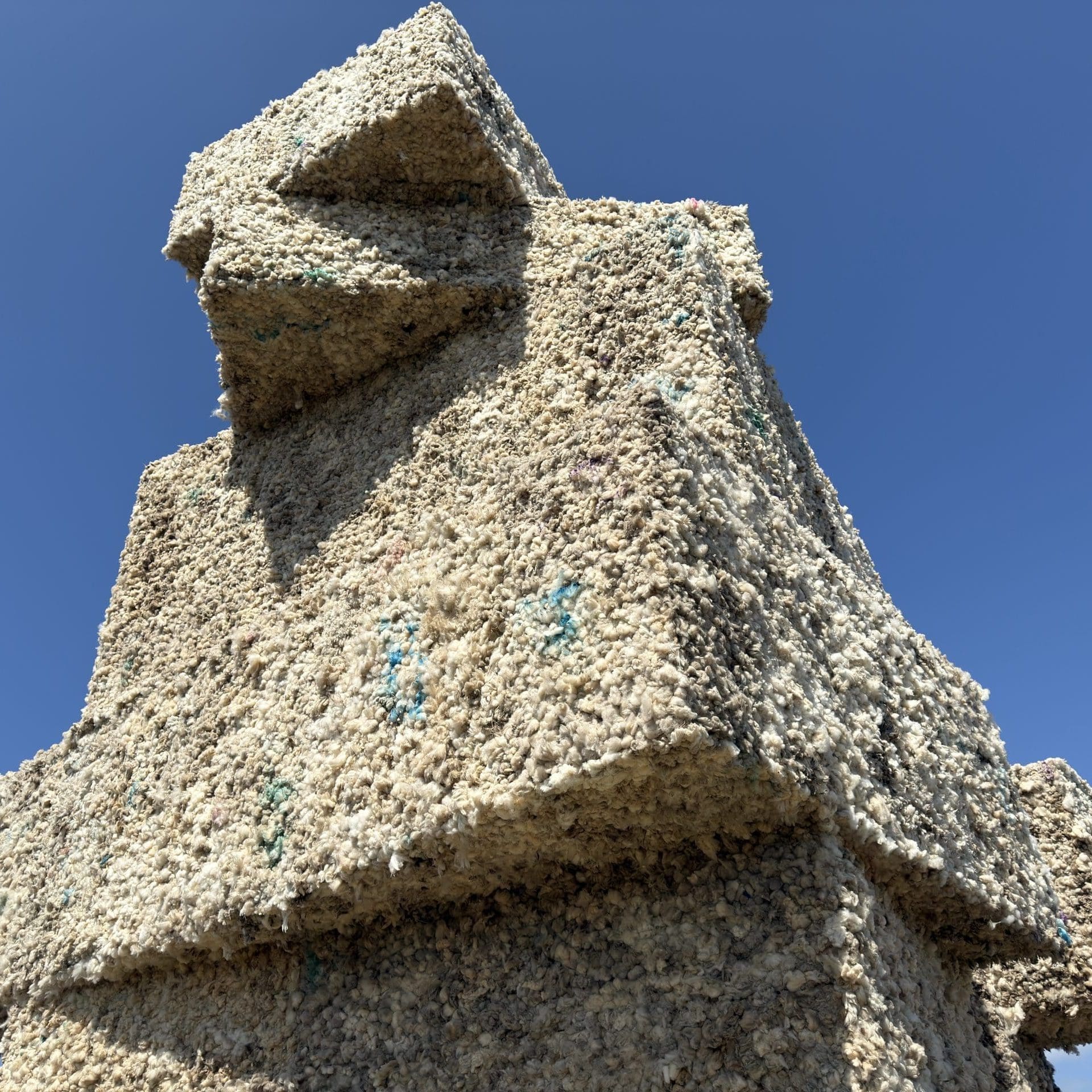
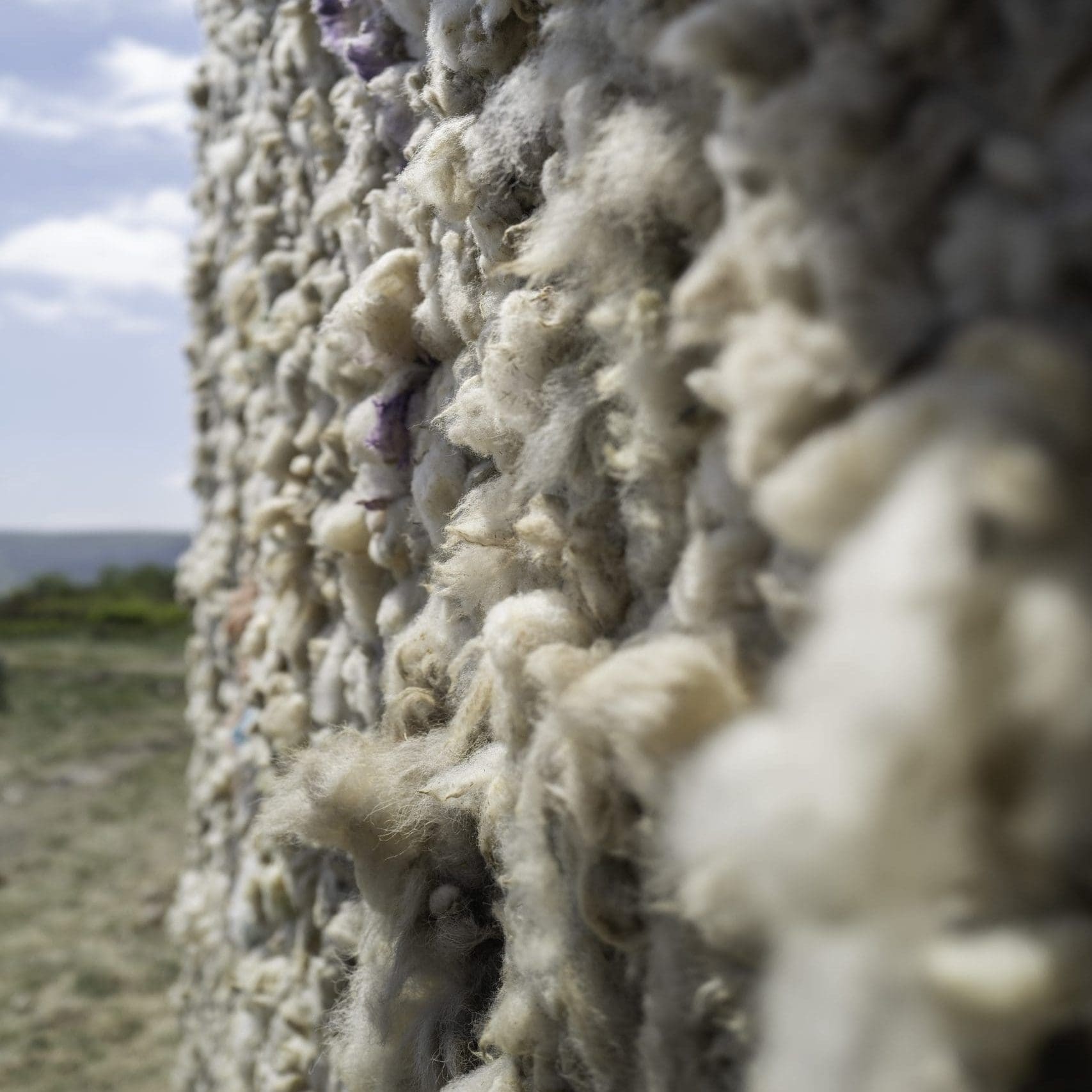
Working with fleece as a material was more than a visual statement — it was about identity, texture, scent and sound. “The tower is something you really have to experience. As you walk toward it, you realise how it’s one of the tallest things in the landscape. Up close, you can see the soft tonal shifts in the fleece — greys, tans, whites — and the bright splashes of flock spray. You can stroke it, smell the raw lanolin and step inside the arch to feel the sound of the wind change. It’s an incredibly sensory experience.”
Creating such a large and delicate piece in a wild environment came with significant challenges. “Getting everything onto the moors was physically demanding,” Steve says. “Most of my installations are up for 16 days. This needed to withstand five months of weather, while still retaining that fragile, fleeting quality.”
The Power of Local Materials
One of the most rewarding aspects for Steve was connecting with local farmers. “I felt a huge responsibility to get it right. I’ve learned so much about sheep breeds, the wool trade and the land itself during this project. There’s a real pride in being part of something that celebrates rural culture on this scale.”
For Steve, art in rural spaces is not just important — it’s essential. “There’s massive creative potential in the countryside. Unlike cities, there aren’t obvious places to put contemporary art, so you start from a completely different mindset. It’s more experimental, more connected to the land and the people. Rural communities have their own cultural references — and they deserve to see ambitious work that reflects them.”
Using local wool was a conscious decision, rooted in sustainability and community. “These structures are all about the hyperlocal. The fleece is as much a building material as the stone and timber nearby. When you use local materials and local skills, people instantly get it. There’s a sense of ownership. And because these works are temporary, I design everything with reuse in mind. When the sculpture comes down, there’s no trace — just memory.”
Go Visit
The sculpture will remain in place throughout summer 2025 — a bold, beautiful tribute to the heritage of British wool, the resilience of rural communities and the power of art to transform familiar landscapes into something unforgettable.
bradford2025.co.uk/event/wild-uplands